Ochilova Komila,
BuxDU mustaqil tadqiqotchisi,
Bahouddin Naqshband ilmiy-tadqiqot
markazi mutaxasisi
The fact that nature and its preservation are mentioned in two hundred and fifty verses of the Holy Quran shows the attention that Islam pays to this issue. We all know that Allah the Almighty created the universe with amazing precision and interconnectedness. He said this in the 49th verse of Surah Al-Qamar of the Holy Quran: "Verily, We have created all things in measure."
So, everything in the world: water, earth, mountains, animals and plants – was created with precise measure and is interconnected. If this connection is broken, serious problems will arise. Therefore, each person should try to preserve peace and nature.
Just as a person takes care of his home and keeps it clean, he should also take care of his surroundings. After all, Allah the Most High has made the entire earth a place for man to live, as He said in the 48th verse of Surah Az-Zariyat:
“We have spread out the earth. And We are the best of those who prepare.” The earth is a home for man, like a cradle for a baby.
There are many hadiths about the responsibility of man in this world, in one of which our Prophet (peace and blessings of Allaah be upon him) says: “So each of you is responsible, and each of you will be asked about his duties.” These short words have a huge meaning. Let us properly fulfill our duties towards nature and the environment before the day comes when we are asked about our duties.
Islam always calls on believers not to harm animals, that is, to be kind to them. Some verses of the Holy Quran explain in detail the purpose of Allah the Almighty in creating the animal world, the order of its protection, how a person can benefit from the animal world, and the methods of breeding animals.
The verses of the Holy Quran such as Al-Baqarah, Anam, Fil, Naml and Nahl are named after animals. These words translate as cow, cattle, elephant, ant and bees.
The Holy Quran emphasizes that all living creatures, including birds, are an “ummah” like humans. This emphasis encourages humans to be kind to all living creatures, who are also their “ummah.” In fact, Allah Almighty created animals as a boon that benefits humans.
In this regard, people should be grateful to their Lord for these blessings, protect and preserve the animal world, which is useful and necessary for them. Gratitude can be expressed in two ways. The first is to praise Allah the Most High for granting such blessings, and the second is to act in accordance with His instructions, using the blessings bestowed by Allah. Islam strongly emphasizes that harming animals in any way is unacceptable.
In a hadith narrated by Ibn Abbas (may Allah be pleased with him), it is said: “A donkey with a brand on its face was brought to the Prophet (peace and blessings of Allah be upon him). He said: “Is it not enough for you that I have cursed those who brand animals and beat them?” In another hadith, the Prophet (peace and blessings of Allaah be upon him) said: “A woman entered Hell because of her cat. She tied it up and did not feed it, and did not give it any earthly food. She died of exhaustion.”
It is obvious that Islam considers killing animals without purpose a great sin and strictly forbids it. Because Allah Almighty created animals for the benefit of people. Killing creatures created by Allah Almighty in vain is ingratitude and ungratefulness towards His mercies. Just like the animal kingdom, the plant kingdom is also one of the great blessings that Allah has bestowed upon human beings, and without this world there would be no life on earth. Therefore, Allah created this world to be a means of life for human beings and a source of sustenance for them and their livestock. Allah the Almighty has also explained this in detail in verses 24-32 of Surah Abas. Allah the Almighty has created the plant world for all the benefits and interests of people. Islamic teachings prohibit the loss, harm and waste of anything that benefits people and their society.
Air is also one of the divine blessings. Although air is not directly mentioned in the Quran, its importance is shown in such phenomena as wind, clouds, and breath: “He (Allah) sends the winds that raise the clouds…” (Surah Al-Araaf, verse 57).
In addition, spiritual life and physical health of a person are directly related to clean air. Modern environmental problems - air pollution, filling the air with harmful gases - violate the right to free breathing. This is contrary to the principle of “non-harming” in Islam. The Messenger of Allah (peace and blessings of Allah be upon him) said: “There is no harm and there is no harm” (Ibn Majah, Darimi). Poisoning the air is causing harm to the health of others, which is considered haram in Islamic law.
Allah the Almighty has blessed us in verses 9-11 of Surah Qaf: “And We send down blessed water from the sky and make gardens and crops grow therewith, and palm trees bearing clusters of fruit as sustenance for the slaves, and We revive therewith a great city.”
From these verses we know that the plant world is the sustenance of the slaves, and the slaves must respect their sustenance, be grateful for it, and treat the plant world properly. On the contrary, a bad attitude towards the plant world will lead to the wrath of Allah and punishment. There are many verses in the Holy Quran about the plant world and instructions on how to use it.
There are many Hadiths that encourage farming and gardening. Here are some of them: Our Prophet (peace and blessings be upon him) said: “If a Muslim plants a tree or grows a crop, and a bird, person or animal eats its fruit, it will be considered as charity for him.” Therefore, we should all strive to understand that if we plant trees and flower seedlings in our yards and the neighborhoods where we live, and if someone benefits from this, then we will receive a reward for this.
Another hadith states: “The greatness of every tree that is planted is recorded in the deeds of the one who planted it.” It is reported that one day a man saw an elderly companion of Abu Darda (may Allah be pleased with him) planting a walnut tree and said: "O respected one, are you planting a tree when you are old and have reached your advanced years? This nut tree will bear fruit after so many years?" Abu Darda (may Allah be pleased with him) replied: "That is enough for me. Let others eat its fruit."
One of the greatest blessings and sustenance that Allah has given to man is water. The Holy Quran emphasizes that water is the main element of life. Life on Earth cannot be imagined without water. Allah the Almighty has blessed us in Surah Al-Anbiya, verse 30: “And We created every living thing from water.” And again, in Surah An-Nur, verse 45: “Allah created every living thing from water.” It follows that the source and composition of the entire living universe is water. This has also been proven by scientific experiments. Water makes up 76 percent of the human body. Water is also the main element of other living things. It is difficult to imagine the world of plants without water.
In Islam, water is a great blessing from Allah and it is forbidden to waste and squander it. Every person should refrain from polluting and wasting water, use it sparingly and value it. “One day the Prophet (peace and blessings of Allah be upon him) passed by a companion named Sa’d who was performing ablution and asked: "What is this wastefulness, O Sa'd?" "Is there waste in water?" asked Sa'd. "Even if you take it from a flowing river," replied the Prophet. It is known that ghusl and ablution are obligatory acts of worship for Muslim servants. If it is impermissible to waste water on these things, then it is impermissible to waste it on anything other than worship.
Of course, it is not enough to simply teach and educate people to be kind and fair to the environment and nature. This knowledge and education must also be implemented and demonstrated by us, adults. From an Islamic perspective, education in the field of environmental protection is the responsibility of the elderly.
Older people should always set an example for young people in protecting and preserving the environment. They should educate the younger generation to have a mature attitude towards nature conservation, compassion for the animal and plant world.
We must always remember the instructions of our grandfathers: do not sweep garbage into the gutter, do not spit into the water, do not sit in the wrong place and do not throw garbage on the streets. If we live on this earth, we will lie in its embrace after death. The improvement of this land, which will become our long-term home, will benefit ourselves and future generations. If we protect our environment and nature from various harmful waste and pollution, we will save our lives and the lives of our future. Who wants their homes to be dirty and littered with garbage? No one, not only our yards and houses, but also the district, the city, and this homeland belong to us. We are all responsible for its freedom. Let us contribute to the prosperity of our homeland. Let us leave a free and prosperous homeland to future generations.
Conclusion
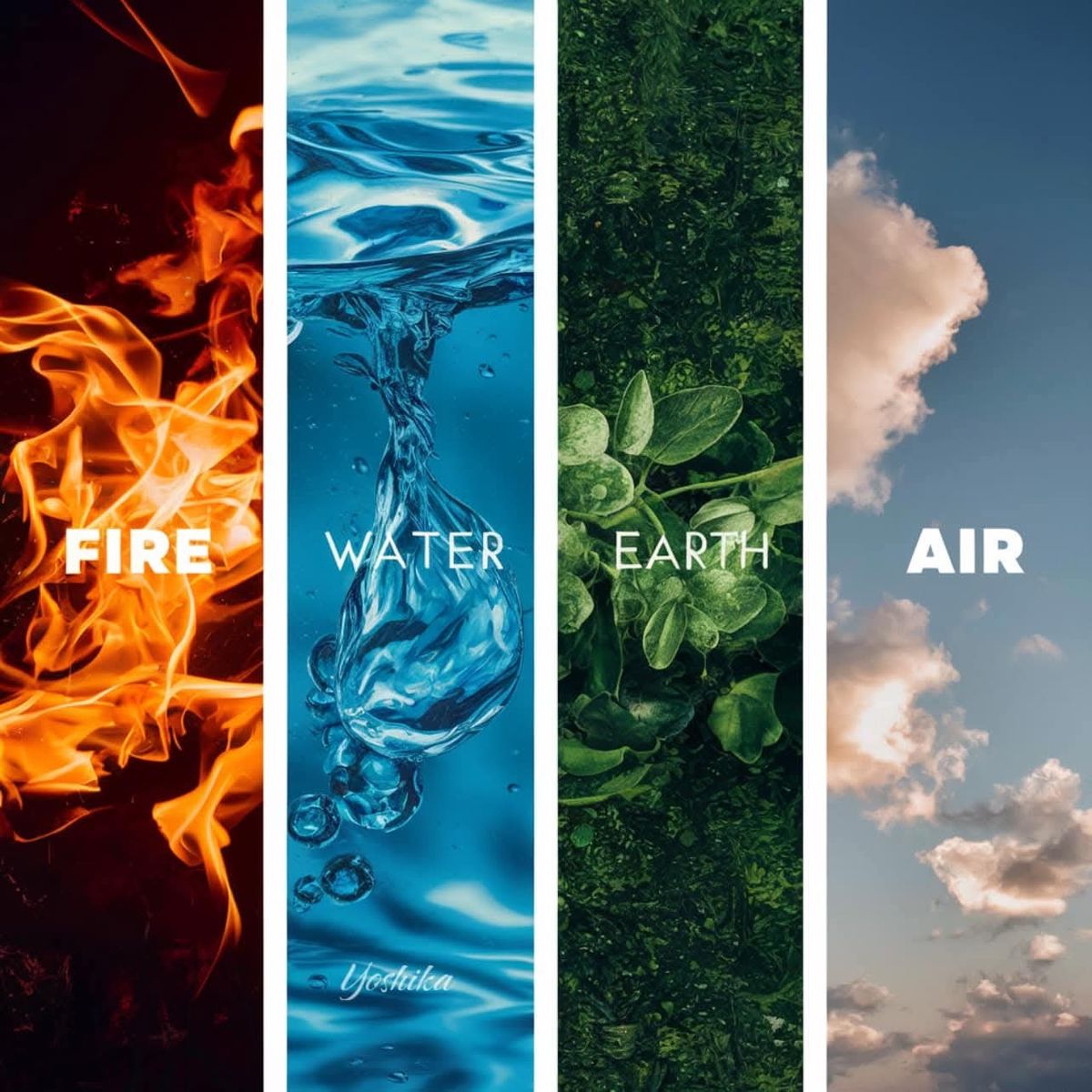
The Holy Quran and Hadith recognize earth, water, air and fire as the four basic elements, which are divine blessings. It is the religious and human duty of every Muslim to preserve them, not to waste them or pollute them. Islam promotes ecological balance, sustainable development and living in harmony with nature. In the context of today's global climate problems, these teachings of the Quran and Sunnah represent important lessons for humanity.
References:
- The Holy Quran. Translation by the Muslim Board of Uzbekistan. – Tashkent: Hilol Publishing House, 2018.
- Imam al-Bukhari. Al-Jami’ al-Sahih (The Authentic Collection). – Tashkent: Sharq Publishing House, 2005.
- https://www.muslim.uz